Sandblasting vs Laser
The Devil is in the Detail
Sand carving is an enriching yet time-consuming and labour-intensive activity. Careful attention must be given to the meticulous preparation of the design and the application of the mask. Paying close attention to detail is essential for creating a well-crafted piece.
Studio Clinq currently only offer sand blasting utilising a specialist sandcarving machine imported from overseas. Sandcarving provides superior depth and crispness, with a bright, frosted finish, particularly for glass, crystal, and large areas. Sand carving blasts fine abrasive particles to remove material leaving a smooth finish.
Laser engraving works by heating the surface to cause fractures, which can leave a duller, rougher edge and a more linear pattern on glass.
Care has to be taken with the design itself, whilst sandblasting will carve fine lines there are limits to how fine blasting will work. The minimum thickness is 0.3mm. Laser can cope with thinner lines but the finish is less pleasing on glass.
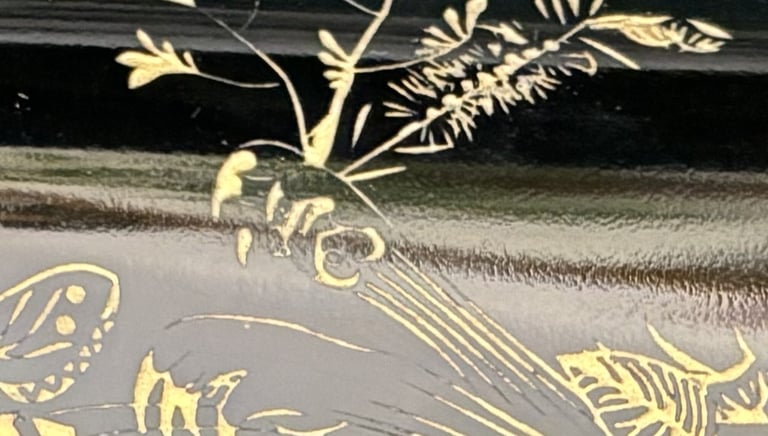
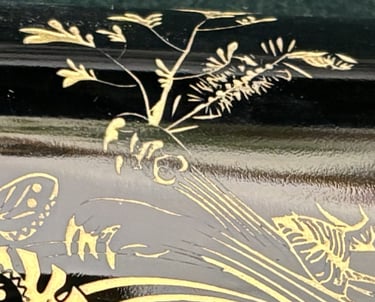
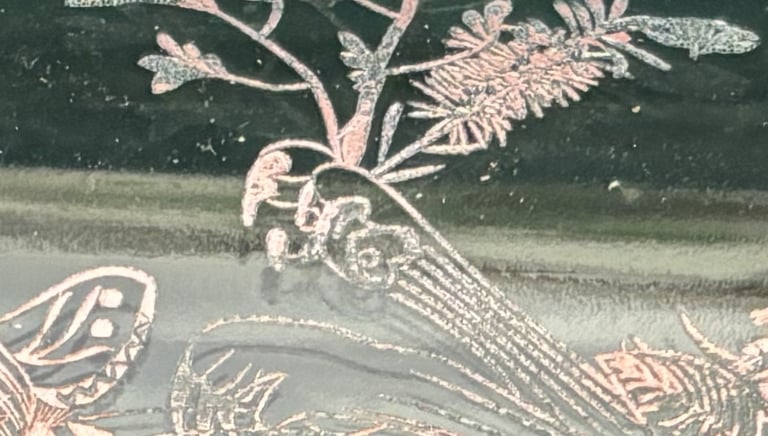
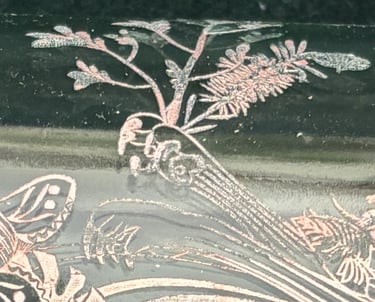
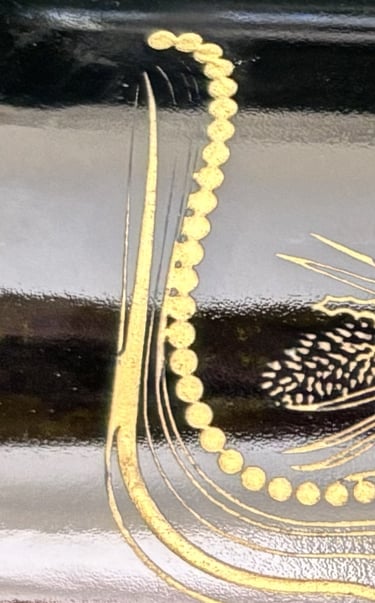
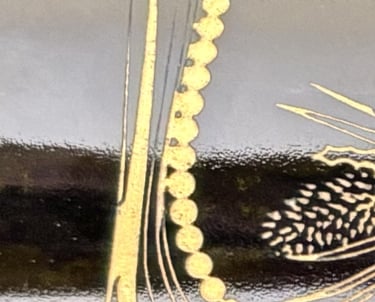
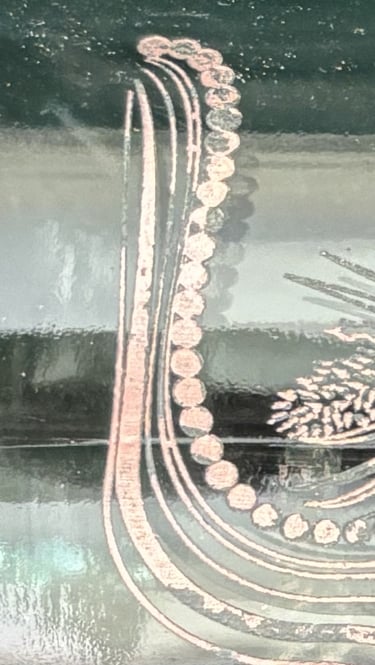
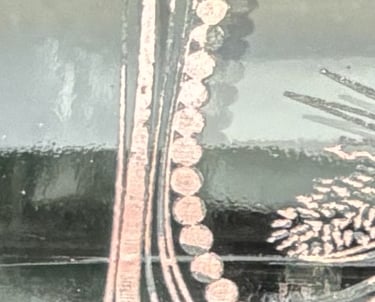
In the examples below, the designs are the same but the gold is sandblasted and the pink is lasered. There are pros and cons to both.
In the pink image, the laser shatters the glass leaving it pock marked with rough edges and while it has engraved every line from the design, it has not kept the true line thicknesses from the original image.
In the gold image, the sandblasting process has kept a smooth finish with clean lines staying with the true line thicknesses, however, some lines have not blasted well because they were too thin.
Engraved
Discover unique, hand-crafted glassware today.
Enquiries to
sandra@studioclinq.com.au
0424 493949
© 2025. All rights reserved.