How Do I Make an Engraved Piece?
Sand carving is a meticulous process that requires significant effort but the results are incredibly satisfying....
Design Creation
Most design ideas begin on paper, and then I utilize a special pen and tablet to draw directly on my computer. The image is converted to vector format to ensure clean straight lines. All images are drawn in solid black and white ensuring all line weights are sufficiently thick to withstand the sandblasting process.
This highland cattle illustration required considerable time to perfect the line weights. Sometimes, what appears appealing on paper does not translate well onto glass.
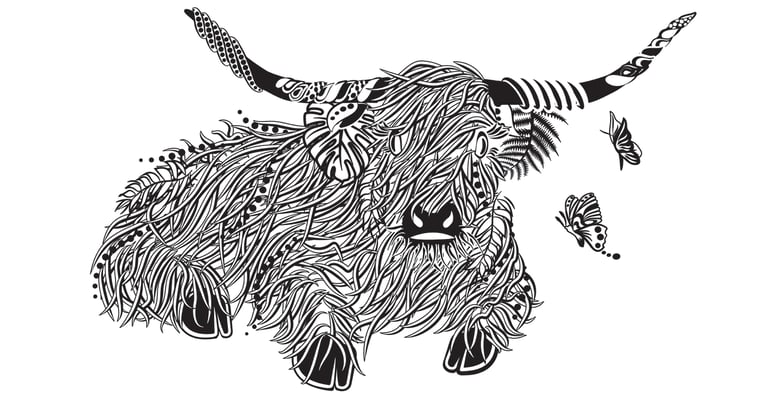
Image Print
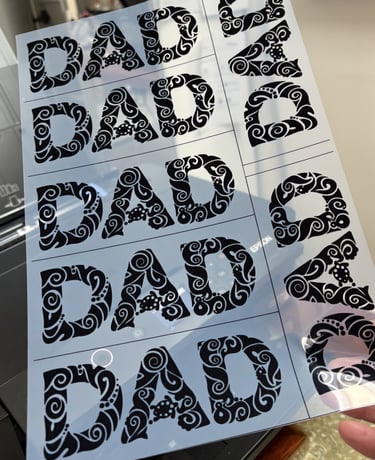
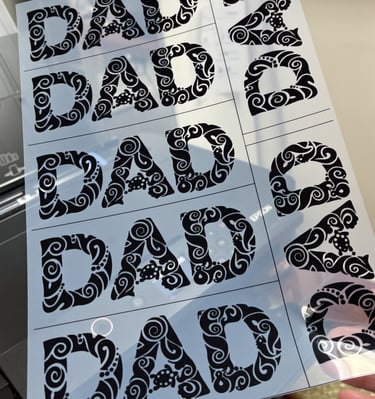
Once I am satisfied the artwork is acceptable for engraving, the image is printed on transparent inkjet film with a photo printer using jet black ink. The black has to be jet black to react with the light during the exposure process.
Expose The Mask
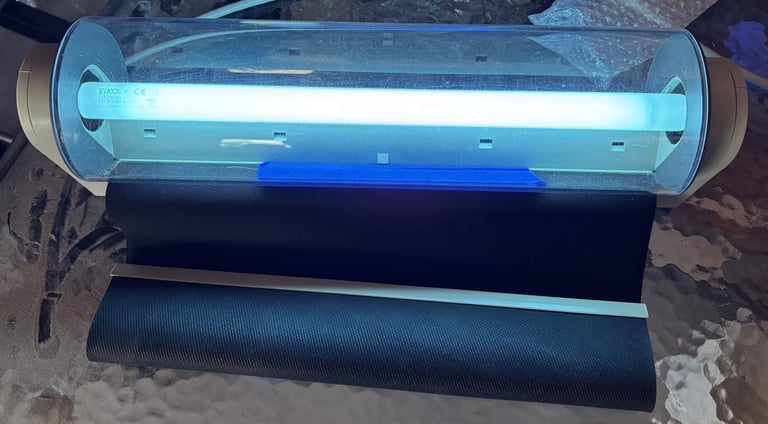
The printed inkjet sheet is applied to a specialised masking sheet and exposed in a light unit for 20 seconds. Any more than that can overexpose the masking sheet and ruin your work and waste the mask. The black ink absorbs the light and makes the mask brittle in the black areas. The inkjet film is now put away. The masking sheet is made up of three layers, a clear slip sheet, a blue masking sheet and a thin clear membrane. The image is not yet visible. Keeping it protected from too much light it is taken to the next step.
Washout
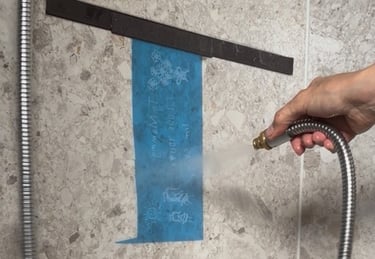
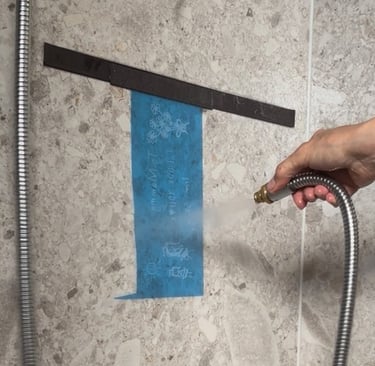
The exposed mask is washed out with a wide angled attachment on the shower head. The exposed areas are washed away leaving the image visible through the slip sheet and transparent membrane - just starting to emerge in this example. Depending upon the size and intricacy of the image this take around 1 minute. The mask then needs to be dried. It can be hung up and air dried which can take up to 1 hour depending upon the weather but I use a food dehydrator which speeds up the process.
Mask Application
Once dried, the mask is tacky and is ready to be applied to the glass surface.
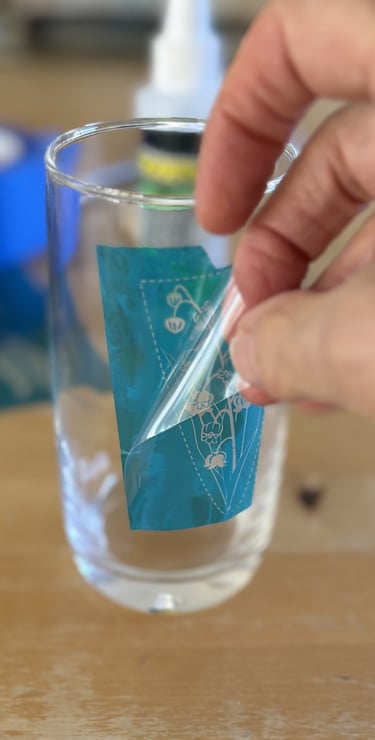
Clean the glass with alcohol spray and position image by pressing into place.
Removed all air bubbles with a flat burnishing tool.
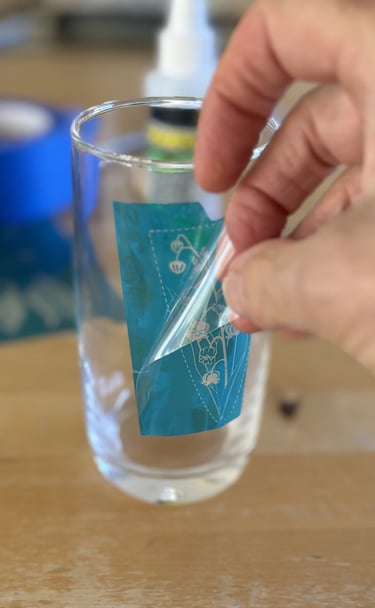
Carefully peel away the clear protective sheet.
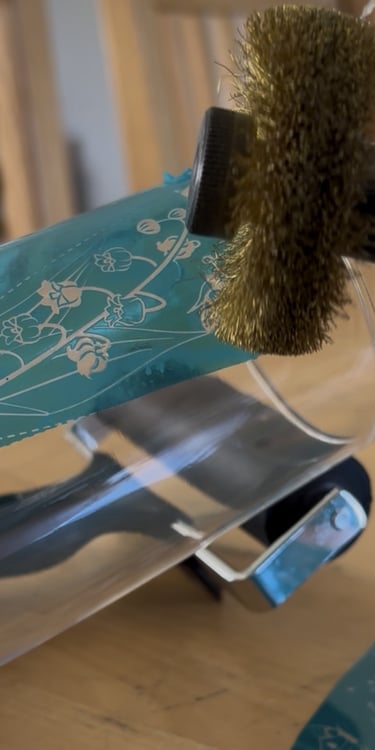
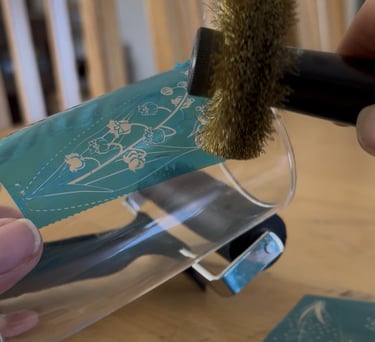
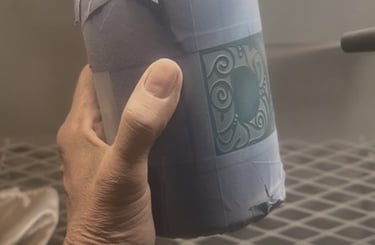
Using a wire wheel, pop the thin membrane to release trapped air and prevent the mask lifting during the blasting process.
Apply thumb pressure to remove trapped air bubbles and to ensure image has adhered to the surface.
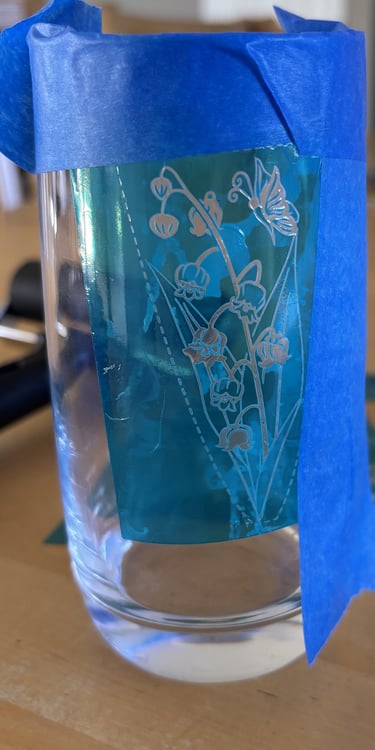
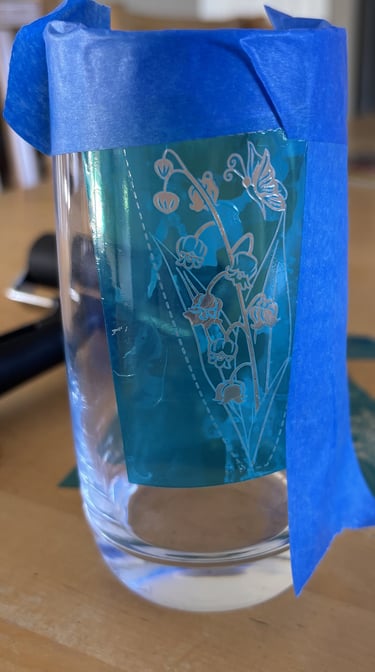
Mask the glass.
Blast Off!
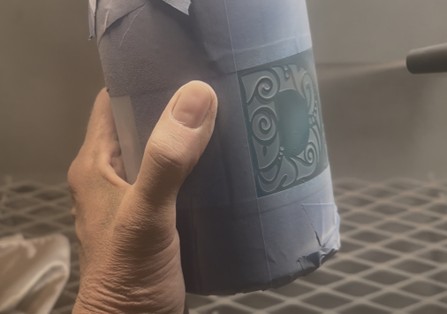
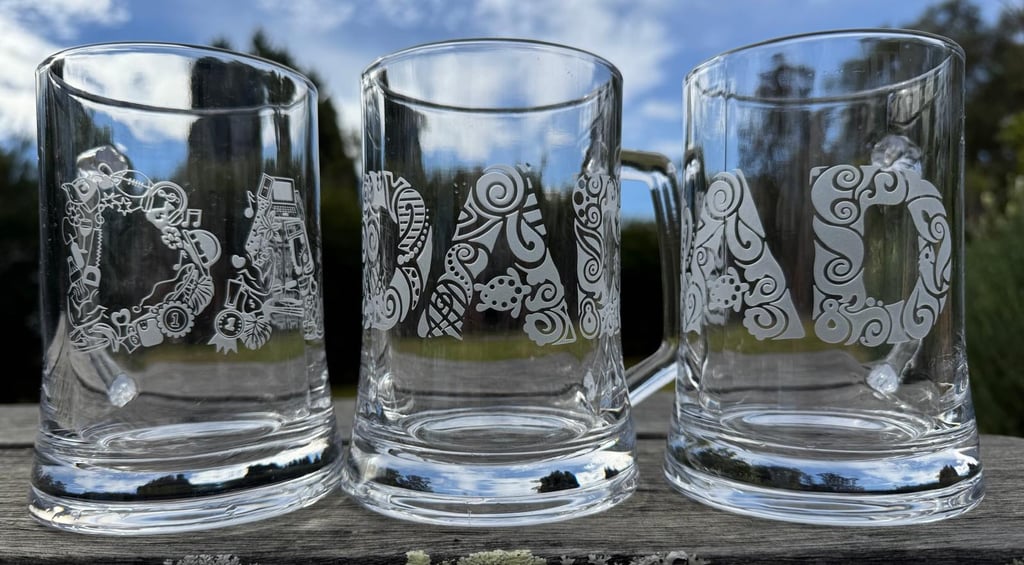
The best part! I utilize my specialized sandblasting machine to engrave the design. The blue mask stays intact while the exposed sections are blasted away. I must take into account the line weights in relation to the depth of the blast and the thickness of the glass. Certain designs and glass pieces may only need a light blast, whereas others might require a more intense and deeper approach.
In Summary
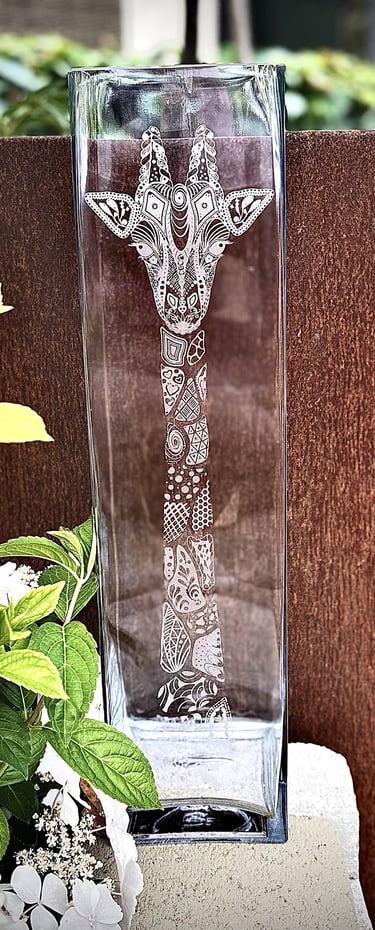
Sandcarving on glass is a meticulous craft that requires considerable time and precision, especially when following the above-mentioned multi-stepped protocol. While laser techniques may offer a quicker solution, they often lack the unique and special aesthetic that traditional sandcarving provides. I can sandblast a wide variety of shapes and sizes, accommodating pieces up to 80cm. It is undeniably time-consuming, but the satisfaction derived from creating beautiful, custom glass art is immensely rewarding. The process involves careful planning and execution, ensuring that every detail is captured in the final piece.
Moreover, the versatility of sandcarving allows for a personal touch, making each piece truly unique. Through the intricate layers of the glass, light can dance differently, producing stunning effects that elevate the art.
Ultimately, whether it's for a personal gift, a commemorative piece, or an element of interior design, sandcarving elevates any ordinary glass into an extraordinary creation. Each piece is not just a product; it carries a story and emotion, which makes the process even more fulfilling. Therefore, while choosing between sandblasting and laser, consider the depth of artistry and the personal connection that comes with handcrafted glass art.
Once you experience the beauty and the uniqueness of sandcarved glass, it's hard to return to any other standard. In essence, my passion for this art form drives the exceptional quality of each piece produced.
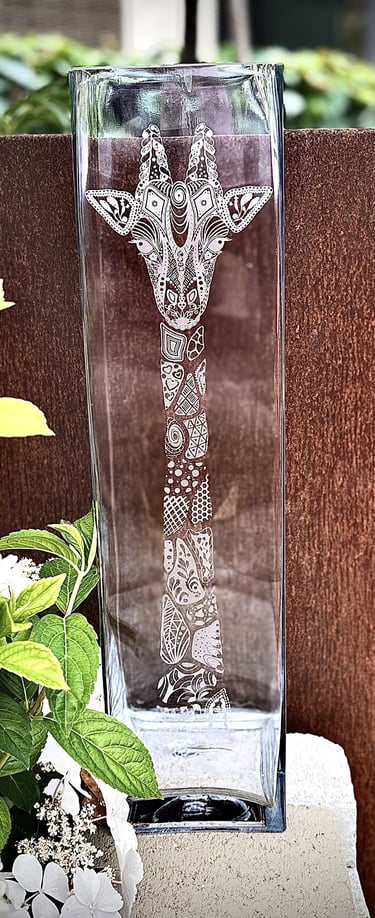
Engraved
Discover unique, hand-crafted glassware today.
Enquiries to
sandra@studioclinq.com.au
0424 493949
© 2025. All rights reserved.